
Toronto Fence Painting & Staining
Professional fence painting, staining & restoration services
Our team specializes in staining & painting fences in Toronto. We are able to coat new fences and restore old worn out fences to help you achieve the look and protection you are after. We work with many types of fence coatings such as solid stains, paints and semi-transparent stains.


2-Year Free Touch Ups
Life happens. That's why we include 2 years of free touch ups (limited to 1 hour per year). We make sure that your home looks great even after we are done.

Efficient & Dustless
Our team is equipped with the top of line dustless sanding equipment which allows us to prep your deck in less time, keep your house clean, and save you money.
Daily Updates & Cleaning
We send daily video updates so that you know exactly what's going on without having to be there. Our crew always protect the surrounding areas and clean up daily so your house never looks like a mess.


Toronto Fence Painting & Staining Projects


Our Reviews
5/5
Peggy Moulder

Vincent went out of his way to get my painting project in Mimico/Etobicoke, done quickly and professionally. I was very pleased with the results. Strongly recommend Finesse Finish Painters for your painting projects.
2025
- 145Page 1
Toronto Fence Painting & Staining Process


Step 1 - Cleaning/Pressure Washing
Dirty fences need to be cleaned prior to staining or painting. For clean or bare wood, this may not be necessary. For dirtier fences, a pressure wash along with cleaner or detergent may be required. If you are planning on fully restoring your fence, we would use a deck revive solution which helps clean the wood and restores grey wood fibres. This is important because you will be able to see any imperfections and dirt on the wood once you stain it with a semi-transparent or natural-stain product.


Step 2 - Dustless Sanding
The second step of the fence painting process is to sand down the wood surfaces. Our team uses top of the line equipment to ensure that your fence is both sanded properly and efficiently to save you money. The Festool sanders we use are connected to a dust extractor to ensure that our team is protected and that your house isn't covered in saw dust. The extent of sanding required will depend on how you want your fence to look.
Benefits of Sanding
-
Open the wood pores so that they accept the stain/paint
-
Smoothen the surface so it looks and appears nice
-
Removes existing imperfections and coatings
Light Sanding
Use Case: Solid-stains & paint
Description: We pass by all the surfaces once with 80 grit sand paper to smoothen the surface, remove loose stain/paint and prepare it for the new coating. This is acceptable because solid stains & paints cover imperfections and do not need to penetrate into the wood as much as semi-transparent or natural stains.
Medium Sanding
Use Case: Bare wood
Description: If the wood is bare, you can perform a medium sand to smoothen the surface and open the wood pores. More time is spent than a light sand. The optimal sandpaper is 80 grit which opens up the wood pore enough to take in the stain while maintaining a smooth finish. If you go finer than 80 grit, the stain will not be able to absorb into the wood as well.
Full Sand / Stripping
Use Case: Natural or semi-transparent stains, greying wood
Description: If you have a previous coating and want to apply a semi-transparent or natural stain, you will have to do a full sand/strip to remove any coating that was previously on the fence. Similarly, if your wood is extremely grey, you will need to fully sand all those damaged fibers off (unless you are doing a paint of solid-stain. This process is extremely labour intensive but provides the best results. We do the first pass with 40 grit sand paper to remove old coatings and fibers. Afterwards we use 80 grit to smoothen the wood prior to applying stain.


Step 3 - Priming, Painting/Staining
Prior to applying the finish coat, the dust and debris from sanding must be vacuumed or dusted off. Leftover dust can cause texture or prevent the stain or paint from adhering/absorbing to the wood. Once the fence is clean, we will apply the coatings which will vary by product
Fence Painting Applications
If you are painting your fence, all of the bare wooden areas will need to be primed. This is an additional step which is not needed if you are staining the fence (as opposed to painting). Paint does not adhere well to bare wood and as such, a primer is required. Once the primer has been applied, we will will apply the finish coat of paint either by brush, roller or spray.
Fence Staining Applications
Fences that are being stained do not need to be primed. Solid-stains & semi-transparent stains work by absorbing into the wood and as such, do not need a primer to promote adhesion. Stains should be applied by brush to ensure that it is worked into the wood pores and not drying on the surface. Sometimes it is faster to apply the stain via roller or sprayer but it should be back-brushed to work the coating into the wood.


Step 4 - Maintenance
The most cost effective way to preserve the beauty of your fence s to do regular maintenance. Contrary to popular belief, you should NOT do a pressure wash every year as this will damage the stain and possibly hurt the wood. If your fence is prone to getting dirty and you must wash the fence frequently, ensure you do it LIGHTLY to avoid damage. We recommend fences get a maintenance coat every 5 years. However, this can vary depending on how much sun & moisture your fence is exposed to. The key is to keep an eye out and apply the maintenance coat before the coating peels, greys or fades. Fences in Toronto and the GTA take a beating because they are exposed to sunny summers and wet winters. As such, no product or prep will make the fence last forever (we have tested many products). Applying a coat of stain or paint every 5 years costs much less than leaving your fence for too long and having to strip it.
Cost of Painting & Staining a Fence in Toronto (2026)
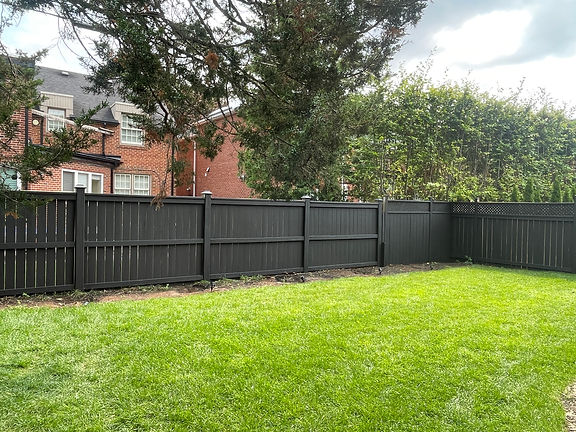
Painted Fence
Best For:
-
When a specific colour or finish is desired.
-
Fences that were previously painted
Includes:
-
Product: C2 Solid Stain
-
Pressure wash
-
Light Sanding & Priming
Starting at: $4/ft

Natural Stain Fence
Best For:
-
Bare fences with no previous coatings
-
Fences in good condition
-
Homeowners looking to maintain the natural look of their fence
Includes:
-
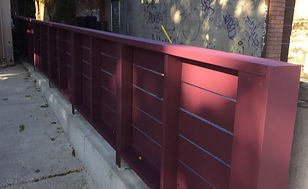
Product: Cutek Extreme Wood Oil
-
Pressure wash
-
Medium sanding or full sanding
Starting at: $5.5/ft
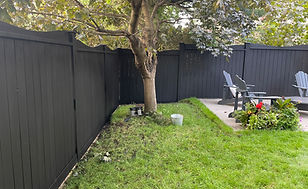
Solid-stain Fence
Best For:
-
People looking to achieve a solid colour
-
Old worn out decks that cannot be restored
-
Decks made from lower grade wood
-
Homeowners with a tight budget
Includes:
-
Product: Dulux Professional Acrylic Wood Finish
-
Pressure wash
-
Light scrape & sand
Starting at : $3/ft
Best Fence Stains & Paints for Toronto Weather (2026)
#1 Cutek Extreme Wood Oil (Natural Stain)
This is our number one pick for natural and semi-transparent stains. I can't say enough good things about this product. We discovered this product a few years ago and have been recommending it to all of our clients. This product provides SUPERIOR protection compared to all other stains available in Toronto and the GTA. It is sold clear but you can add pigmentation to turn it into a semi-transparent stain. The appearance is good and dries very even (no lap marks). However, the main benefit of this product is that it can be recoated very easily and you do not have to strip or sand to do maintenance coat. The product is additive, meaning the more you coat it, the better it becomes. Though the initial price tag is high, you save in the long run due to reduced labour and maintenance costs.
Pricing: $110 +HST / gallon (colour toners are additional)

FAQ About Deck Staining In Toronto
Q: What is the difference between paint and stains?
The main difference between staining and painting is how both products adhere to the wood. Paints sit on top of the wood, providing a protective film which covers the wood. This means that as the paint weathers, it will start to peel and flake off. Stains on the other hand tend to penetrate the wood and prevent water and UV from entering and damaging the wood. As stains age, they fade or very lightly flake unlike paint.
Q: When should I paint my fence and when should I use a solid-stain on my fence?
Solid-stains and paints are almost identical in appearance. However, we find that solid-stains are superior to paint for fence applications. Solid-stains are more cost effective, less prone to peeling and easier to maintain than paint. If you have a new fence and want a solid-colour, we would almost always reccomend a solid-stain over a paint
We would only recommend painting a fence if the fence was previously painted or if you desire a certain colour or finish. Paints can achieve truer colours than solid-stains and can come in different sheens if you want a shiny look.
Q: What is the difference between natural, semi-transparent and solid stains?
A: Solid stains are best suited for when you want a specific colour (they can be tinted in many colours just like paint), when the wood is ugly, old or has previous coatings. Solid stains can go over top most other stains without looking stupid and do not require excessive prep-work. They can also be applied to bare wood surfaces without needing to be primed (unlike paint). Another reason that homeowners choose solid stains is because they do not peel as they weather; instead they fade or lightly flake like other stains.
Transparent stains are sometimes also called natural stains or even called sealer. These stains protect decks and fences from water but do not to alter the natural colour and appearance of their wood. With that being said, most transparent or natural stains still add a slight pigment and give the wood a "wet" look. Transparent stains work by penetrating the wood and preventing water from absorbing into the wood. However, due to the stain having minimal pigmentation, it does not protect the wood against UV rays. As such, you will notice that the wood will patina over time (the wood greys out from the UV).
Semi-transparent stains are similar to natural stains except they can be tinted to achieve different colours while also showing the natural wood grain. The additional benefit of the added colour is that the pigment protects the wood from the sun's UV rays.
Q: Do you recommend water-based or oil-based stains?
A: If you are using a natural stain, we would recommend using oil-based stain. They last longer, look more natural, don't peel and can usually be easily recoated (this depends on the product). Oil stains penetrate the wood and as such they fade instead of peel as they age.
Good solid-stains are almost always water-based. We have found that water-based solid stains last longer, look better and are easier to touch up than oil-based solid-stains.
Q: What factors affect the cost of painting or staining a fence in toronto?
A: The cost of painting or staining a fence is affected by:
-
The size of the fence. The taller or longer the fence, the more work and material will be required.
-
The pattern of the fence. Flat fences are easy to prep and paint/stain. Lapped fences, lattice and other patterns which require more detail will increase the cost.
-
The condition of the fence. New fences or bare wooden fences generally cost less to paint or stain because they require less prep. Fences that are greying, dirty or have existing coatings require more prep and thus cost more to paint or stain.
-
The type of coating being applied. Solid-stains tend to be the most cost effective product for your fence. Paint requires the additional step of priming which increases the cost. Natural & semi-transparent stains require significantly more sanding and prep so they tend to be the most expensive coating to apply.
Q: Do existing coatings need to be removed prior to painting or staining my fence?
A: In general, existing coatings need to be removed prior to applying a natural or semi-transparent stain. That is because natural & semitransparent stains work by penetrating the wood and existing coatings could prevent the penetration. However, some products such as Cutek Extreme Wood Oil could be reapplied without stripping if the wood was previously coated with Cutek.
Solid-stains can usually be applied overtop previous stains without having to remove the prior coating. That is because the new solid-stain products are "hybrid" or latex and partially behave like a paint. That means they penetrate but can also adhere to a surface without penetrating.
Q: How long do stains & paints last on fences in Toronto?
A: In Toronto's climate, stains on vertical surfaces should last 5+ years depending on the conditions they are exposed to. Horizontal surfaces on your fence will last around 2 years. Toronto & the GTA experience has a harsh climate for decks (sunny summers & wet winters). which makes frequent maintenance unavoidable. The name of the game is to reduce the overall lifecycle cost and there is no product which will last forever.
Q: Is there a warranty?
A: We offer a 2 year warranty on exterior painting jobs. However, this does NOT include horizontal surfaces such as decks and hand rails. These areas take a beating and it is unpredictable how they weather.
Q: Why is my fence turning grey?
A: When unprotected wood is exposed to UV, it begins to develop a patina (the fibers turn grey). Some people like the natural patina whereas others find it unsightly. The patina can be sanded off or restored using a deck revive solution. Natural stains do not prevent the patina from developing because there is no pigment in the stain. Semi-transparent stains and solid-stains can protect the wood from UV and prevent greying.
Q: When should I use a solid-stain?
A: Solid stains are best suited for when you want a specific colour (they can be tinted in many colours just like paint), when the wood is ugly, old or has previous coatings. Solid stains can go over top most other stains without looking stupid and do not require excessive prep-work. They can also be applied to bare wood surfaces without needing to be primed (unlike paint). Another reason that homeowners choose solid stains is because they do not peel as they weather; instead they fade or lightly flake like other stains. Solid stains are very easy to maintain. They do not peel like paint and do not require intensive prep to recoat. When the product begins to weather, all you need to do is clean the surface, lightly sand it and then apply the solid stain.
Q: When should I use a natural-stain?
A: Transparent stains are best used when you have nice wood and would like to highlight natural look of the wood grain while providing water protection. Some instances where transparent stains are used are on cedar decks or exotic decks or on front doors with high grade wood. Using a transparent stain is a pricey way of protecting your deck/fence/door. Due to the wood grains being visible, a larger amount of prep-work is required to make the finish product look beautiful. This is especially true if there is an old coating which needs to be stripped. However, new surfaces that are bare and clean do not require a ton of prep. Transparent stains need to be frequently recoated due to the lack of UV protection (lack of pigmentation). As such, they patina (grey) quickly and need to be recoated to restore their natural look. The only product we recommend for transparent stains is Cutek Extreme be cause it can simply be washed with a cleaner and then directly recoated. If you use a different product, you may have to do more intensive prep just to maintain the surfaces. With that being said, the process for applying natural stains is the same as that for semi-transparent stains. The only difference is that you have to be even more thorough.
Q: When should I use a semi-transparent-stain?
A: Semi-transparent stains are used in similar situations to natural stains. They are perfect when you have nice wood, want to highlight the grains AND want to add a colour to the wood. The pigment in semi-transparent stains help them provide additional UV protection when compared to natural stains.
Fence Staining Service Areas
Our professional team of painters provide deck staining services in the following areas: Etobicoke, The Kingsway, Baby's Point/Old Mill, Bloor West Village, Swansea, High Park, Forest Hill, Summerhill, Rosedale, The Annex, Richmond Hill, Mississauga, Vaughan, Toronto & the rest of the GTA